 |
| sed quia sunt qui huic visioni cosmou detractant: |
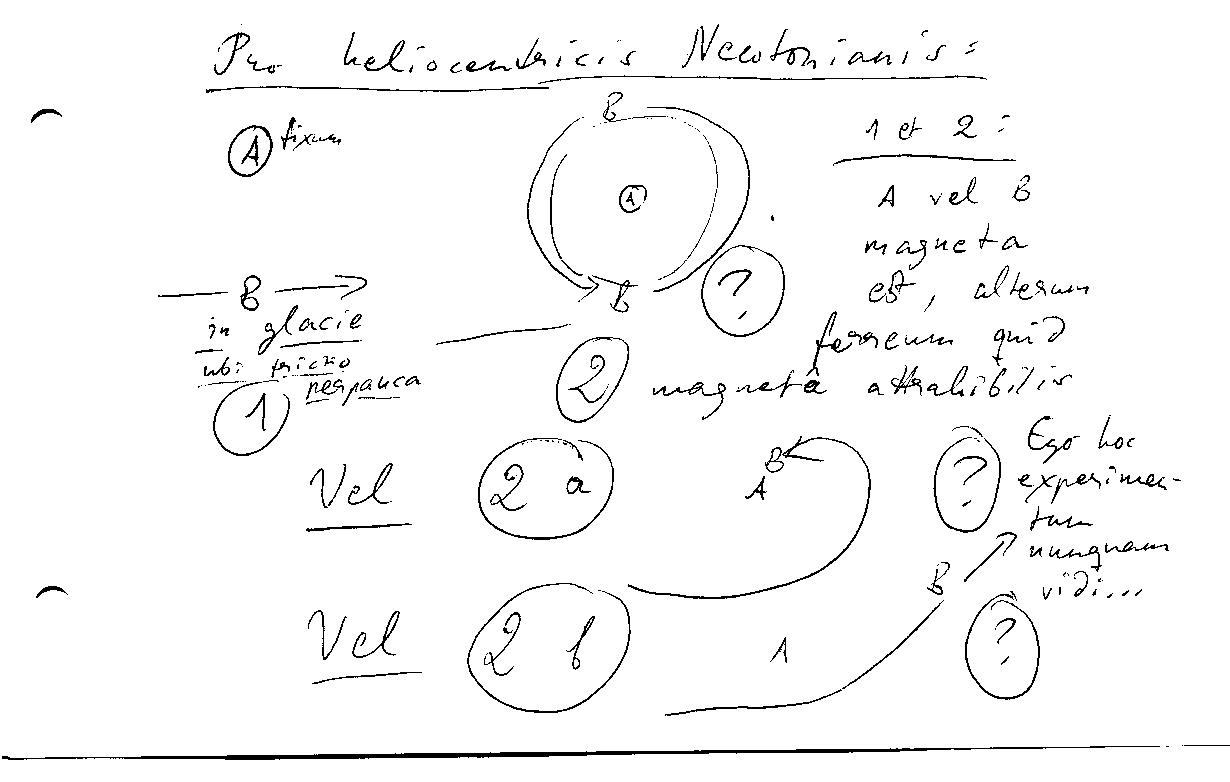 |
Thursday, November 18, 2010
Mirabilis cosmos, mirabilior cosmou Creator
1) Mirabilis cosmos, mirabilior cosmou Creator, 2) Terra et Astra secundum Aquinatem in Commentario de Hiob capite xxxviij

Tuesday, November 16, 2010
Al essorcista Dom Gabriele Amorth
O letto la sua intervista per un giornale ollandese.
La prima cosa che fa è diriger gli sui casi ai psichiatro. Avanti da costatare si c'è una maledizzione, il dottore dove costatare si c'è una maladia.
Mai questo è erroneo: il diavolo puo molto bene nelle maledizioni imitare una maladia psichiatrica, sopratutto si la maladia in se non è una maladia, mai una maledizzione mal interpretata per una pseudoscienza. Lo che fa suppone anche che nunca il dottore possa ricorre ai maledizzioni per avere pazienti. Non è realistico.*
Non so si la Susana Maiolo è possessa o non, non so si è vittima lei di una maledizzione o non, mai sono molto sicuro che al momento delle fatte le due notti di Natale aveva su ragione e la sua voluntà intatte, che faceva lo che faceva per essere giudicata per la chiesa, como in Spagna ante 1820 i oppressi blasfemmiavano per essere giudicati per il Santo Ufficio, riputato meno corrutto che la corte seculare. Dopo, facevano una pelegrinazione a Santiago per far sattiosafazione per la blasfemmia. Allora, sono anche molto sicuro che si siente vittima della oppressione e che l'oppressore in occurenza è precisamente il psichiatro.
Il sacrilegio commisso per la Maiolo è ligero, non contro la Ostia, nè contro il celebrante ai momenti più sacrati, mai contro il celebrante a un momento di meno importanza liturgica. Como i spagnoli che volevano essere giudicati per il Santo Ufficio non commettevano sacrilegio mai solo la blasfemmia - credo normalmente da dicere "Ostia", gia che oggi è un "juron" molto usitato in Spagna.
Ch'il buon Dio benedica su lavoro correttamente fatto como essorcista e ch'il lei da la luce di non essere "trompato" per i psichiatri, como mi sembra molto risichiato oggi, secondo le sue parole nel giornale ollandese.
Hans-Georg Lundahl
Parigi, "Mairie" del III
Santa Margarita da Scozia
16/XI/2010
*Per esempio: dicere cose ai nemici assenti è una nevrose, cio è un bisogno scomfortabile, che puo molto semplicamente essere un frutto di una maledizzione. Dai psichiatri questa abitudine è "non nunquam immo non raro" interpretata como "alluzinazione auditiva" e sintoma della si chiamata "schizofrenia". Scusa per mi malo italiano, mai ho poco studiato il italiano per se, molto più il latino ed il francese.
Wednesday, November 3, 2010
Beaubourg, près d'un collège, 2050, si le monde durera?
- Le garçon demandait: est on lesbigay ou homophobe dans ta famille?
- La fille: ah, plutôt lesbigay.
- Alors, t'es adopté par un couple de lesbiennes ou par un couple gay?
Rigolades. C'était des décennies depuis que ça c'étais l'agenda des lesbigays.
- Non. L'adoption est reservée pour des vieux célibataires ou des couples dont la femme a dépassé 45 sans avoir enfants. Une vieille fille peut adopter dès 35.
Le ton avec lequel elle faisait ces précisions légales était un peu sec.
- Quoi alors?
- Mes papis étaient en couple avant de marier mes mamies. Mes mamies aussi.
- Et tes papis, ils se voient encore en privé?
Bouh général! On savait que des choses comme ça arrivaient des temps en temps, mais la sodomie se soldait déjà avec des années de prison. Comme la contraception, sauf en cas de premier accouchement très difficile d'un couple (tarder les mariages était aussi découragé). Les apothicaires qui donnaient les capotes étaient obligés de demander une ordonnance. Seuls les non-cathos s'occupaient de ces ordonnances. C'est à dire des non-citoyens.
- Non, c'est interdit ça aussi, tu sais. Et dans ta famille, on est homophobe?
Rigolade. Homophobe comme un militaire et séminariste, c'est à dire quelqu'un qui recherche raisons de soupçonner la sodomie là où elle ne se trouve pas.
- Oui. On est militaires.
Soulagement général. Tout ce qui relève de caserne, on a des raisons assez solides d'être un peu plus méfiants que tous les autres ...
Friday, October 1, 2010
Conversations in a Scottish Krak
Here is the story, set in 14th C. I · II · III · IV · V · VI | Want a modern debate on partly same subjects? Our Lady of the Rosary to today, debate between a geocentric thomist and some heliocentrics · Five more days with same, concluded on St Luke |
I - The castle was built a century ago. Back when there were Templars and the Pope was still in Rome in the years of Grace 1275 and 1276.*
The laird had played a significant part in conquering Isle of Man, was rewarded and could at last afford to build it. It was not as big as a krak in Palestine, but it was similar in architecture. His son married in obedience to a law made by the Scottish Parliament in 1288, a woman who proposed to him. Her father was a Swedish miner who had sold his share in Stora Kopparberg to the bishopric of Westeros in June. Thirty years later HIS son aids retaking Berwick upon Tweed from the English. Nearly forty years later HIS son (greatgrandson of the laird) aids in paying ransom for David II, 1357. He was still laird, and not weak for his age of seventy.
Lady Cougherleigh came back as a widow after the funeral of Duke Rudolf IV of Austria. She descended from a cousin of the first laird of the shire to have a castle, and the family had been impoverished since. Her daughter, Elsa, was only two, now she was 14. A bit fat, which explained why she was not yet married or even with a fiancé. She was always sitting in the alcoves and looking out of the arrow slits while occupied with embroidery. Knitting? Not known in Scotland back then!
Somewhat older, the son of a rebec fiddler. Ian Mac Kinnyough was already 25. Fiddling with rebecs was not a great income.
* http://fr.wikipedia.org/wiki/Château_Pèlerin fut bâtie en deux ans, 1217 et 1218/was built in two years (c Fr version)
II - Ian sat down opposite Elsa in the alcove.
"When I left, I did not know you."
"I was as yet a child, only eleven years old"
"That was some time ago" he said with appreciation.
"Where have you been since then?"
"I have been to study the rebec and even Moorish music in Spain and France mainly, a little too in the Empire, but I do not speak either High Dutch or Low Dutch, only where the speak French and Aostan."
"Where did you like it? What was like here?"
"Two different questions, I think."
"So you do not like it here?"
"I do, but I like places that are very different too."
"Take like here first ... any castle like this?"
"The Montilium of Adhemar, close by the Rhone river, one of the largest in Europe and in the known World."
"And what did they eat there? Any sweets we do not know here?" (She would ask about sweets, plump as she was).
"Right over there, they mix honey with nuts and fry it in a pan, when it cools down it is white. They call it nogat in that area."
"Which means?"
"Have you learned Latin?"
"Yes."
"Mel nucatum."
III - "And Montilium is hillock, but what does Adhemar mean?"
"It is a name, of German origin, but I am not sure they could translate it now in the Germanic parts of the Empire."
"Why not now?"
"Languages change. There was a time when they spoke Latin as you have learned it in France. Then came the Franks and learned that Latin when they settled. They brought the name Adhemar along back then. Since then Latin speech changed to French, and to Lemousin, as we learn for court. And I am sure the High Dutch of our days is not the Frankish that could translate Adhemar, not really same."
Elsa was quiet ... then she said: "if it had been Edelmar, I would at least tell that Edel means noble."
"Ah, you know High Dutch?"
"I was born in Vienna, when my father served at the court of Archduke Rudolf."
As they were quiet, they did not mind at first, then the prudishness of Ian made him take to talk again.
"The walls are thick. The stones are hewn. Hewing such stones takes time, and this alcove shows they are as thick as a man is tall. Yet this castle was built in two years."
"Oh, but they are not at all hewn stone all through!"
"How do you know?"
"The laird is my warden, and he knew quite a bit of masonry. Once his grandfather helped a mason, who was indebted and who had to promise to give him the secrets of the buiolding trade. 'I cannot unless you become a mason' he said. Or so the laird claims. He became a mason, though he is never building anything. But he knew how to build and so does his grandson"
"And if it is not hewn stone, what is it then? Air?"
"No. Pebbles and stones. Just as in a hillock. Only the stone walls keep that from forming a hill of gravel."
"So we are sitting on gravel?"
"We are."
"But then the level must have been pre-determined?"
"How would you know? Are ou a mason too?"
"No. I am a fiddler, I also know a bit of theology and history. Both are important if you sing about what happened long ago concerning God and Church as often as mortal men."
"How then?"
"Well, in a line I determine the level of syllables before I put in the words."
IV - "How do you mean 'determine the level of syllables'?"
"I say to myself: here I will have seven, here I will have six, here I will have seven, here I will have six."
"And then?"
"Roses are blushing for you
you sweeter than a rose
Moses would call an idol
the image of your nose"
"Whom is that about?" she laughed.
"I made it up - but I was looking at your nose."
"Please don't!" she was chagrined. She went away.
They met again a few days later.
"Have you ceased idolising my nose?"
"I have not been trying very hard. I admit that."
"Let us talk about something else, shall we?"
"Like what?"
"The creator. As you saw from my nose, he knows good workmanship. But take other examples will you."
"Well, the stars."
"Yes," she said, and her eyes glistened like such, but he dared not tell, not this time.
"They are very distant. Even the earth is very great, and yet the closest, the moon, is seen from the north and from the south of it. The sun is even more distant, since it is sometimes hidden by the moon. And the constellations of stars are even more distant than the sun, horoscopes are made (for the superstitious) by seeing which constellation is hidden by the sun for a month and also which ones are hidden by the moon for some days or which ones appear at horizon in a certain hour."
"And?"
"Even though as distant as all that, they all circle the earth every day. That means they go very very fast, much faster than an arrow. And they are very big also. And they never get into disorder. Who made that? God. Not only Christianity tells us so, but reason says such an order cannot be conceived without someone keeping it in order and such many and big burning bodies going so fast must have a mover."
"What about just moving on of its own accord?"
"We never see that. Particularly not in circular movement. A spinning top will spin around for some time - like saying a Pater or two - then slow down and fall as it stops turning."
"So God is amusing himself with the stars as a child with a spinning top?"
"Unless ye become as a child ye will not enter the kingdom of Heaven ... God cannot get bored, because He is infinite bliss. Children give us a foretaste of Him."
"So God likes children? I guess that is why they are so tender ... and why it is so ..." - and she stopped.
"Something about making them?"
"Yes." She blushed.
"Well, married people would know more about that ..."
V - Now some readers might think they are not going to keep chaste until marriage. They are. She was old enough to marry, back in those days. Even France had the limits 14 for men and 12 for girls (Louis XVI and Marie-Antoinette had been of age for two years when marrying) up to the 1790's.
Both knew what they were talking about. Both knew they should not, as not yet married, either to another or to anyone else. Both knew changing the subject was a really bright idea. Or moralising it.
"They would" she said.
"And we know more than we should as not yet married, I think," said Ian.
"Ah, let's leave it for them to enjoy!"
"Let's. Stars are a better subject for our talk, I think."
"They are. In Paris, I met an old professor, a bishop, Nicole, and he was from Oresme. He said it would make sense too if it was not the heavens that turned but the earth. Only, since we cannot prove it, we should keep to what our eyes tell us."
"How would you prove a thing like that? It is impossible!"
"Right as it is, we are proving the opposite, since the stars beyond the Sun - most of them, I am not counting planets like Jove and Sattern, keep their places."
"You mean, if we saw them all turn around in the opposite direction, we would know it was we who were moving in the opposite direction, like in a boat when approaching land it seems trees and mountains all move to us?"
"Exactly."
"But we don't. Or do we? After all I have not been gazing on stars?"
"We do not. Planets move around, but there are or we see only Moon, Venus, Mercur, Sun, Mars, Jove and Sattern, all other stars we see have their fixed places."
"And so do we then."
"So do we"
"But if they are that distant, even the sun and the moon are so distant we do not see them move, we only notice when they move beyond some object - if the stars are so much further, would we not be unable to see them move if they did?"
"There is a glass lense, when you put it between your eye and an object, it seems greater. If one day one does that for the stars ... But even so, in order to prove anything, the stars would need to be same distance from sun, and we moving around it each year."
"Why?"
"If we moved around the Sun each year, but the stars were very different distances - not counting the Planets, of which we know that - we would see the same thing as if the Earth stands still and most stars are still, but some move in time with the Sun."
"So, if we cannot tell the difference, either might be true. How do stars move anyway?"
"Philosophers say there are spirits guiding them. As Christians we believe in angels and that they, invisible but created, are between God and the seen creatures. Even St Dennys from the Areopagus said that much."
"Who was that?"
"Have you read acts of the Apostles?"
"No. Is it a book in the Holy Writ? I have only read Gospels."
"St Paul converted him."
"You mean that was after Pentecost and a few years later, when St Paul was on his voyages?"
"Ah, that much you know without reading it!"
"I do listen to what is preached by the curate."
VI - "Well, I suppose reading is not everything. As a fiddler I should know that, it is my work to make people hear and remember stories without them having to read. Some have not learned it, others have sore eyes ..."
"The laird is getting sore eyes. Since he did learn letters and enjoyed reading, that is hurtful to him."
... after a moment of silence ...
"You said there was a glass lentil with which you could see things as it were bigger than they are?"
"There are even Italians who will cure the lairds condition, not in itself, but in its effect, as a crutch might for the legs, by putting two glass lentils together."
"I did not know."
"Oh, the first one to do it was not quite a hundred years ago, and this place in Scotland is not quite a Sorbonna."
"True."
Then she added: "did you have as pretty a cousin as me serving you a meal back there?"
"No. Are you serving me a meal?"
"Let's go a few alcoves further and see if the basket is still there."
It was, but Ian had detected the wonderful smell of cheese and smoked sausages before they reached it.
A meal prayer (said somewhat hastily, he would have to admit) and some bites further on, he said: "no, I did not that. There were only men allowed on Sorbonna, as on other academies."
"Glad to be home or sad to have left Sorbonna?"
"Oh, glad to have been there and glad to be home. Very much so."
A little further on he said: "your rye bread is better than they have in Paris - they would do well to stick to wheat bread, though it is more expensive."
"Was their rye bread as bad as all that? Eating wheat bread every day must be expensive!"
"I was joking. Their rye bread was fair enough, but yours is better."
Sunday, August 1, 2010
Varela y Aquino
| Antonio María Rouco Varela, | St Thomas Aquinas |
| ha afirmado que espera que la Ley de Salud Sexual y Reproductiva e Interrupción Voluntaria del Embarazo sea declarada "inconstitucional en algunos aspectos", aunque manifestó que los gobernantes que no lo apliquen tendrán que dimitir porque "no están por encima de la ley". "Un gobernante tiene que aplicar la ley y si no lo hace tendrá que renunciar a su cargo", ha dicho en referencia a las reticencias iniciales de algunos presidentes autonómicos respecto a la aplicación de la norma. "El marco general es ése, pero después hay que aplicarlo a situaciones concretas porque un gobernante tiene la obligación de cumplir la ley, no está por encima de la ley", ha indicado, para añadir que "otra cosa es qué hace con su conciencia ante una ley que es injusta", algo que, a su juicio, "es un problema que habría que ver en cada caso". | I answer that, As Augustine says (De Lib. Arb. i, 5) "that which is not just seems to be no law at all": wherefore the force of a law depends on the extent of its justice. Now in human affairs a thing is said to be just, from being right, according to the rule of reason. But the first rule of reason is the law of nature, as is clear from what has been stated above (91, 2, ad 2). Consequently every human law has just so much of the nature of law, as it is derived from the law of nature. But if in any point it deflects from the law of nature, it is no longer a law but a perversion of law. I-II, Q.95, A.2, Corp. |
| fuente | source |
Friday, July 23, 2010
The railroad worker ... and his descendants
The railroad worker may be great
Yet think his hammer is dumb
And the rails will wait
As he rales at fate
When the hammer struck his thumb!
He may be Christian and devout
And kiss the Holy Rood
Yet the rails will wait
As he rales at fate
If the cook has burnt the food.
He may be a dancer, gallantly
Turn ladies, kiss them soon
Yet the rails will wait
As he rales at fate
If the fiddler is out of tune.
His descendants may be bloggers bold,
Love all things internet
Yet the mails will wait
As they rale at fate
If connexion is upset!
On Rail Putters and Preacher Men
There are reasons to rale · for a rail putter:
the hard weather · harsh hours of work;
the bad wages · that await him therefore;
the absent kin · for which whores soothe him
- or to pray and hear · preachers lauding
the Lord's love for us · the lasting bliss.
There are reasons to pray · for preaching men:
the hard hearted · harming others;
the unfaithful · eating and drinking
who hope to hold · happiness carnal,
who heavenly hopes · hold no longer;
the best gone bad · and bitter of heart:
or reasons to rale · as a rail putter.
But a rail putter · who rales no more,
getting back to kin · bettering his mood,
getting back to God · bettering his ways
is a joy for the heart · of heaven's fishermen.
These are reasons to pray · not to rale, preacher!
Subscribe to:
Posts (Atom)


